
While many observers and critics describe the current confrontation between the United States, Israel, and Iran as a quagmire, stalemate, or even a “new Vietnam” for the United States, the crisis may be better understood through a different historical analogy: the 1956 Suez Crisis. The Suez Crisis demonstrated a fundamental shift in global power relations, revealing that the United Kingdom and France could no longer pursue independent military and foreign policies without the consent and support of the United States.
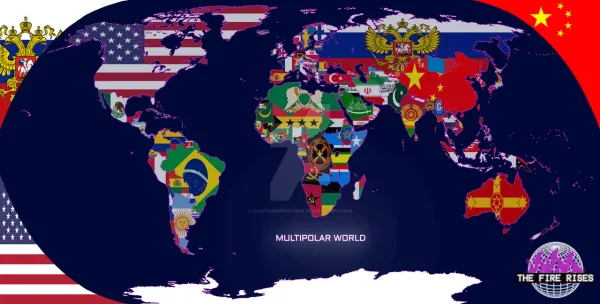
Likewise, the present conflict illustrates not only the limits of Israeli strategic autonomy, but also the broader transformation of the international system as American dominance is increasingly challenged by the rise of China and the emergence of a more multipolar world order.
In 1956, Britain and France, in coordination with Israel, launched a military operation against Egypt after President Gamal Abdel Nasser nationalized the Suez Canal. Militarily, the invasion initially appeared successful. However, the operation collapsed politically when the United States refused to support it and instead pressured its allies to withdraw. Washington feared that the invasion would destabilize the Middle East, strengthen Soviet influence, and undermine the postwar international order it was constructing. The crisis exposed the declining status of the old European imperial powers and confirmed that strategic legitimacy in the postwar era depended heavily on American approval.
The current confrontation with Iran reveals similar structural dynamics under very different geopolitical conditions. An additional parallel between the Suez Crisis and the present conflict lies in the strategic importance of maritime chokepoints and the assertion of sovereign control over them. In 1956, Nasser’s nationalization of the Suez Canal represented not merely an economic decision, but a political declaration that Egypt would no longer permit a vital artery of global commerce to remain under foreign domination. Similarly, Iran’s ability to threaten, disrupt, or selectively control access through the Strait of Hormuz gives Tehran leverage over one of the world’s most critical energy corridors. Much as the Suez Canal symbolized imperial influence over global trade routes in the mid-twentieth century, the Strait of Hormuz has become a contemporary arena in which regional powers can challenge the international order through strategic geography. Iran’s ability to exploit this chokepoint demonstrates how control over narrow maritime passages can compensate for broader conventional weaknesses while imposing significant economic and geopolitical costs on more powerful adversaries.
Israel possesses formidable military and intelligence capabilities, including advanced missile defense systems, cyberwarfare units, and overwhelming regional military superiority. Yet despite these strengths, Israel remains deeply dependent on American diplomatic protection, military aid, intelligence sharing, and strategic coordination. Without sustained American support, Israel’s capacity to sustain a prolonged regional conflict with Iran would be severely constrained. The crisis therefore demonstrates that Israel, much like Britain and France during Suez, cannot fully pursue an independent regional strategy outside the broader framework of American geopolitical interests.
At the same time, however, the present crisis differs from Suez in one crucial respect: the United States itself now faces structural constraints that did not exist during the height of its postwar dominance. In 1956, Washington acted as the undisputed leader of the Western world and possessed overwhelming economic and geopolitical leverage over its allies. Today, American power remains immense, but it operates in a far more contested international environment shaped by the rise of China.
China’s emergence as a global economic and strategic power fundamentally alters the context of the Middle East conflict. Unlike the Soviet Union during the Cold War, China has embedded itself deeply within the global economy and become the largest trading partner for many states in the region, including Iran and key American allies in the Gulf. Through initiatives such as the Belt and Road Initiative, Beijing has expanded its political and economic influence across Eurasia and the Middle East while avoiding direct large-scale military entanglements.
For Iran, China provides an economic and diplomatic lifeline that reduces the effectiveness of American pressure campaigns. Chinese purchases of Iranian oil, long-term investment agreements, and diplomatic engagement weaken attempts to fully isolate Tehran. This external support gives the Iranian regime greater strategic confidence and endurance in confronting the United States and Israel. Whereas earlier American administrations could rely on overwhelming international economic leverage to compel adversaries into submission, rival centers of power now provide alternative partnerships that blunt the impact of sanctions and diplomatic isolation.
The rise of China also intensifies American strategic dilemmas. Washington must divide its military, economic, and political attention between multiple theaters simultaneously. While the United States remains heavily engaged in the Middle East, its primary long-term strategic competition increasingly lies in the Indo-Pacific. As a result, prolonged confrontation with Iran risks draining American resources, political attention, and military readiness at a time when U.S. policymakers increasingly view China—not Iran—as the principal geopolitical challenger of the twenty-first century.
The cautious response of many traditional American allies further underscores the changing geopolitical landscape surrounding the conflict. Unlike earlier periods of overwhelming American dominance, several major NATO and European partners have shown clear reluctance to participate directly in military escalation against Iran, instead emphasizing diplomacy, de-escalation, and regional containment. Their hesitation reflects not only fears of another prolonged Middle Eastern war, but also a broader shift within the Western alliance system itself. Increasingly, American allies appear less willing to automatically align themselves with U.S.-led military campaigns that carry uncertain strategic objectives and significant economic risks. In this sense, the crisis reveals not only the limits of American coercive power over adversaries, but also growing constraints on Washington’s ability to mobilize unified allied support behind its geopolitical agenda.
This dynamic helps explain why the United States has shown growing reluctance to become trapped in another indefinite Middle Eastern conflict. Despite overwhelming air power, naval dominance, and advanced military technologies, Washington has struggled to translate military superiority into decisive political outcomes. Efforts to dismantle Iran’s nuclear ambitions or fundamentally weaken the regime have instead often strengthened hardline factions within Tehran, allowing the government to mobilize nationalist sentiment and portray itself as resisting foreign aggression.
Yet Iran’s ability to sustain confrontation despite extensive damage to its military infrastructure, energy facilities, and economy reflects the fundamentally asymmetric nature of its strategic doctrine. Unlike conventional military powers that depend on air superiority or large-scale territorial conquest, Iran has long structured its defense strategy around endurance, decentralization, and the imposition of political and economic costs on stronger adversaries. Through dispersed command structures, underground missile facilities, proxy networks across the region, cyber capabilities, and the ability to threaten critical shipping lanes such as the Strait of Hormuz, Tehran seeks not necessarily to achieve outright military victory, but to make prolonged conflict prohibitively costly for its opponents. This approach mirrors the logic of other asymmetric conflicts in which weaker states compensate for conventional inferiority through strategic patience and attritional pressure. As a result, even severe military strikes may fail to produce decisive political outcomes if the targeted state retains the capacity and willingness to continue generating regional instability and economic disruption.
The inability of superior military force to secure decisive political outcomes recalls earlier American experiences in Vietnam, Iraq, and Afghanistan. Tactical victories and technological superiority have repeatedly failed to translate into durable strategic success when confronting ideologically motivated and politically resilient adversaries. Iran’s decentralized security apparatus, regional proxy networks, and long-term strategic patience make it exceptionally difficult to coerce through conventional military means alone.
The unilateral American declaration of a ceasefire further reinforces the broader geopolitical significance of the crisis. Much as the Suez Crisis exposed the declining autonomy of Britain and France, the current conflict may expose the growing limits of American power itself. Washington remains the dominant global military actor, yet it no longer possesses the same uncontested ability to shape outcomes unilaterally. Rising powers such as China increasingly constrain American freedom of action by offering rival economic partnerships, diplomatic alternatives, and geopolitical balancing mechanisms.
In this sense, the conflict is not merely a regional war or another Vietnam-style stalemate. It may instead represent a transitional moment in the evolution of the international order. Suez symbolized the end of the old European imperial era and the rise of American hegemony. The current confrontation with Iran may similarly symbolize the gradual erosion of the unipolar moment that followed the Cold War. As China rises and global power becomes more diffuse, the United States faces growing difficulty imposing its preferred political outcomes through military superiority alone.
The broader lesson of the conflict, therefore, is not simply that military power has limits, but that geopolitical authority itself is becoming fragmented in an emerging multipolar world. Just as the Suez Crisis exposed the irreversible decline of the old European imperial order, the confrontation with Iran may come to symbolize the gradual erosion of the unipolar era that followed the Cold War. The United States remains the world’s preeminent military power, yet overwhelming force no longer guarantees decisive political outcomes in a system increasingly shaped by regional resistance, asymmetric warfare, economic interdependence, and the rise of rival centers of power led above all by China. What is unfolding in the Middle East may therefore represent more than another regional conflict. It may mark the visible beginning of a new international order in which American primacy persists, but no longer operates without meaningful geopolitical constraints.
This article was previously published in Foreign Policy Talks
https://www.foreignpolicytalks.com/post/america-s-suez-moment-in-the-middle-east